Tuesday, November 23, 2010

Cadillac Sports Cars Aera lightweight Concept Car
This is the Cadillac Aera (Aero + Era) launches Cadillac's philosophy of "Art and Science" into new territory by taking an innovative and stylistic approach to ultra-light weight vehicle design. LOS ANGELES – The Cadillac Aera concept vehicle won the 2010 Los Angeles Auto Show Design Challenge, tying with Smart and besting entries from seven other automakers including Mercedes-Benz, Honda, Nissan, Toyota and Maybach. GM Advanced Design has now won the honor more times than any other design team.
General Motors advanced design California has come up with a concept cars zero-emission vehicle as part of this year’s LA Auto Show Design Challenge. Cadillac Sports Cars Aera lightweight Concept Car is a 1000 lb, 2+2 touring coupe, with a range of 1000 miles before refueling; attributes achieved without compromising size, capacity and safety. With an ability to seat four, the vehicle uses a body structure made from mono-formed 3D lattice that is extremely sturdy.
Cadillac Sports Cars Aera lightweight Concept Car
This marks the third time that the group from General Motors has won this challenge, giving them the most wins out of all automakers that enter. The Cadillac Aera Concept hit on all areas that the judges were looking for and, despite the futuristic styling, still carries some recognizable lines from Cadillacs of today.
Jussi Timonen, lead designer for the project shared: „The Cadillac Sports Cars Aera concept was designed to continue the forward-thinking imagination of Cadillac’s ‘art and science’ philosophy. It’s designed as a small city urban vehicle, but we approached this 2+2 touring coupe very much from the brand’s luxury perspective. Every detail of the Aera was conceived to minimize the vehicle’s environmental impact without sacrificing the style, comfort and attention to detail that are hallmarks of the Cadillac cars brand.”
Cadillac Sports Cars Aera lightweight Concept Car
The Aera is powered by compressed air via a highly efficient Pneumatic Drive System that has a 10,000-psi composite air storage tank with capacity for a 1,000-mile range. Flexible, pressurized air cells in the exterior skin, similar to material developed for the NASA Mars Rover airbags, enhance passive safety and interior comfort. The flexible polymer skin optimizes aerodynamics and functions as an ultra-lightweight alternative to conventional body panels and glass.
Additional technologies include an All-In-One (AIO) wheel system, combining rotary actuator propulsion, steering and suspension functions. A drive by wireless system decreases the mass of electrical components. Vehicle to vehicle communication (V2V) promotes active safety. The Cadillac Aera embodies a stylistic, lightweight, minimalist approach to long distance luxury touring.
Cadillac Sports Cars Aera lightweight Concept Car
The Design Challenge is part of the Design Los Angeles automobile designers’ conference and has evolved into an integral element of the Los Angeles Auto Show. Design Los Angeles connects those working in the design industry with well-known automotive design industry leaders. Los Angeles is home to the world’s largest concentration of manufacturer design studios, representing automakers from North America, Europe and Asia. It is also the home of Art Center College of Design, one of the world’s foremost transportation design institutions where many of today’s leading automotive designers began their careers.


The Daewoo Lanos was a subcompact car manufactured by the Korean automaker Daewoo Motor from 1997 to 2002, and from 1997 to 2008 made under a license agreement by the Fabryka Samochodów Osobowych (FSO) in Poland, marketed as FSO Lanos, and assembled in Ukraine in modified versions known as Daewoo Sens and Chevrolet Lanos.

For a brief period, it was also assembled by TagAZ in Russia, marketed as Doninvest Assol. The Lanos was designed by Giorgetto Giugiaro and featured three body styles - 3-door and 5-door hatchbacks and a 4-door sedan. Lanos was designed to replace Daewoo Nexia in the Daewoo lineup and was itself replaced by Daewoo Kalos.

The cars were equipped with GM Family 1 D-TEC I4 engines ranging from 1.5 L (1549 cc) SOHC to 1.6 L (1598 cc) DOHC. In the UK and many countries of Europe (like Italy, France or Austria) there are also E-TEC models 1.4 (1349 cc) and 1.6 (1598 cc). The suspension is built upon that of a Daewoo Nexia, as used in Vauxhall/Opel Astra Mk2 GTE.

The four models available were S, SE, SE Plus, SX, and later, the SPORT model. The S was the base model and did not include many standard features (like a CD player or power windows). The SE was just a small step up from the S base model. However, the SX model usually included a CD, radio, and cassette player along with power windows, a power side mirror, and fog lights. A few select SX models even came with a sun-roof though not many did. In the Lanos's later years, the SE and SX models were dropped and replaced with a new trim line called the SPORT (2001–2002). The SPORT included several features similar to the SX, but also included red/black leather seats, and a metallic silver dash trim. Also, the SPORT model had window controls located on the doors rather than the center console (like in the previous trim lines).

In Australia, the 1997-2003 Daewoo Lanos was assessed in the Used Car Safety Ratings 2006 as providing "worse than average" protection for its occupants in the event of a crash.
Europe: models received the following European New Car Assessment Program (Euro NCAP) 1998.

In crash tests conducted by ANCAP in 1998 to EuroNCAP regulations RHD Lanos 3dr hatchback showed poor performance, scoring 0.31 out of 16 in offset front crash test and 6.98 of 16 in side impact test.

Russian magazine Autoreview tested LHD Chevrolet Lanos T150 sedan built by ZAZ in 2006. It scored 10.5 of 16 points in offset front crash test.

Check out expert reviews for a new or used Daewoo Lanos. Our in-depth reviews for the new Daewoo Lanos provide current pricing and safety information, as well as detailed comments from our road testers. Our reviews for a used Daewoo Lanos include detailed road-test ratings and recall notifications. Yearly changes and repair costs are all included to help you decide if a used Daewoo Lanos will fit your needs.

Monday, November 22, 2010

Porsche 911 GT3 Cup
Porsche 911 GT3 Cup
The 2011 Porsche 911 GT3 Cup race car is the latest edition of the best-selling racing car of all time, having been built in a production series of more than 1,400 units since 1998. It for costs £94,600 plus VAT and deliveries to customers will begin in early 2011.

The Porsche 911 GT3 Cup race car is designed by the same team based in Weissach, near Stuttgart, Germany, responsible for the iconic Porsche 911 GT3 and RS road cars. This race car tips the scales at 1,200 kg, resulting in even sharper performance on the circuit.
This car is based for the first time on the 911 GT3 RS road car, this is the first Porsche 911 GT3 Cup car to feature the 44-millimetre (1.73″) wider body at the rear, which provides increased space for even larger wheels and slick tyres. Wider front wheel arches also clearly show that the front wheels/tyres are likewise bigger which, combined with other evolutionary changes, has enabled the dynamic performance of the latest car to reach new heights.
At the back car there are rear wing is extended in width from 1.46 to 1.70 metres (57.5 to 66.9″) and now mounted higher up. The rear bumper valance with its distinctive air vent openings and LED technology rear lights, in turn, come straight from the GT3 RS road car.
The front axle rides on three-piece light-alloy rims measuring 9.5 J x 18 (previously 9 J x 18) and running on 24/64-18 Michelin racing tyres. The width of the three-piece light-alloy rims on the rear axle have increased by one inch, and now measure 12 J x 18 with 27/68-18 tyres.
The latest interior include cockpit for the specific needs of the race driver, vent in the upper part of the front lid, the controls for the Info Display are now positioned directly on the steering wheel for as control a variety of functions including the pit-lane speed limiter, windscreen wipers, and lights.
Porsche 911 GT3 Cup

Porsche 911 GT3 Cup


Porsche 911 GT3 Cup
Porsche 911 GT3 Cup

2010 Volvo Sport Cars Air Motion Concept
At the Los Angeles Design Challenge Competition, Volvo took the open-air experience at a whole new level with its ‘lighter than a Formula 1 racing car’ study project – the Volvo Air Motion. Besides its strong yet ultra-light body structure, the Air Motion concept cars vehicle further adds to its superlatives eco-friendliness, as it is not using a single drop of gasoline while driving wild.
Volvo Air Motion is a sports cars that runs on powerful, yet simple compressed air motors that, unlike an internal combustion engine, cools down under load rather than heat up. The air tank is centrally mounted and receives compressed air through wind-powered air replenishment sites that float 1000ft in the air. Its beautiful Scandinavian body is designed like a clam shell and sculptured from ultra light carbon fiber.
2010 Volvo Sport Cars Air Motion Concept
Tipping the scales at under 1,000 pounds (453 kg), the Volvo Air Motion Concept is lighter than a Formula One car and employs a similar open-wheel configuration.
2010 Volvo Sport Cars Air Motion Concept
The 2010 Volvo Sport Cars Air Motion Concept was developed around the idea that minimizing the weight and complexity means maximizing driving enjoyment. Volvo built the cars with fewer components and replaced the heavy internal combustion engine with powerful, yet simple, compressed air motors.
To compress the air needed for the centrally mounted air tank, Air Replenishment Sites are used. Powered by air turbines floating 1,000ft in the air they harness the power of the wind and convert it to electricity to provide the compression. The motors cool down with increased load, instead of heating up, which eliminates the need for cooling systems. The chassis, interior and suspension employ an integrated design which brings a notable contribution to the lowered weight.
Aimed at the driving enthusiast, by a company synonymous with safety and environmental care, the Volvo Air Motion Concept demonstrates the beauty and purity of Scandinavian design and delivers a guilt free, raw driving experience.
2010 Volvo Sport Cars Air Motion Concept

Sunday, November 21, 2010

Bmw Hybrid Sports Cars

Bmwx6ah6


Bmwx6ah3_2


Bmwx6ah2


Bmwx6ahcut


German luxury automaker BMW joins the growing list of manufacturers offering gasoline-electric hybrid models with this fall's introduction of the 2010 X6 ActiveHybrid.
The hybrid version of BMW's luxury “sports activity coupe” will be displayed at the Frankfurt Motor Show in mid-September, then will begin arriving at U.S. dealerships in the fourth quarter, the company announced this week.
It's the first BMW to receive a gasoline-electric combination drive system, but as with the high-end hybrids previously rolled out by Japanese rival Lexus, the X6 will use the technology more as a performance enhancer than as a way to boost fuel economy.
The X6 hybrid will come with a twin-turbocharged 4.4-liter V-8 engine that cranks out 400 horsepower and 450 foot-pounds of torque on its own. It will be assisted by two electric motors, one providing 91 horsepower and the other 86, that, when working with the gasoline engine, will give the X6 a total output of 480 horsepower and 575 foot-pounds of torque.
There is a fuel-economy advantage of about 20 percent over a gasoline-only powertrain with the same performance, BMW says.
It is the first hybrid drive system in a sports activity coupe — the name given to this new genre of vehicle that offers a strange combination of coupelike styling with SUV practicality. It has four passenger doors and a rear hatch that allows for the loading of cargo as in a traditional sport utility vehicle. It's the SUV for people who swore they never would drive an SUV.
BMW says its ActiveHybrid technology “provides a glimpse into the future, achieving outstanding driving dynamics with equally impressive efficiency.”
The X6 “melds both of these qualities to offer a truly unique driving experience,” the company said, and is designed to combine “the combustion engine with electric motors to create a powertrain with new levels of dynamic performance and efficiency.”
Like many of the newer so-called two-mode hybrids, the X6 will be capable of driving on electric power alone for short distances — up to 1.6 miles — at speeds up to 37 mph, the automaker said. Above that speed, the gasoline engine will kick in automatically.
Top speed will be limited electronically to 130 mph, but the X6 hybrid, with help from those electric motors, will be able to go from zero to 60 mph in just 5.4 seconds, BMW says.
No EPA ratings have been announced yet; they “will be available closer to the market introduction,” the company said.
Power is transmitted to the drive wheels through a seven-speed automatic transmission that can be shifted manually. The car also will have BMW's xDrive all-wheel-drive system, designed to send power as necessary to front or rear axles, or a mixture of the two as road conditions warrant.
The electric motors are powered by a nickel-metal-hydride battery pack under the floor of the cargo area, but it does not take space away from the luggage compartment — the hybrid model has the same cargo capacity as the gasoline-only X6.
A reinforced steel casing surrounds the battery pack, which is positioned just above the rear axle to keep it as safe as possible in the event of a collision. The hybrid system's electronic controller constantly monitors the battery pack, and if there is any malfunction or a crash occurs, the computer deactivates the system for safety.
NiMH batteries are the standard now for hybrid vehicles, but most automakers are developing lithium-ion battery packs for their hybrid and pure-electric cars of the near future.
To recharge the battery pack while the vehicle is driving, either or both of the electric motors are spun by the vehicle's motion to convert them into generators when they're not being used to provide acceleration — just as in other hybrids. There is no plug-in option for recharging the X6's batteries from an outside power source.
Regenerative braking — which kicks in when the vehicle is decelerating — is used to recharge the batteries as well.
A continuously variable transmission provides two driving modes — one for stop-and-go driving at lower speeds, and the other for highway speeds.
BMW says that from startup and at low speeds, only one of the electric motors is activated. But when the driver pushes the accelerator harder to boost power and to increase acceleration, the second motor starts the gasoline engine. It also serves as a generator to provide power to the vehicle's accessories.
At highway speeds, the gasoline engine provides most of the power, the company says.
The transmission's three planetary gears and the two electric motors combine to give the vehicle “seven total effective gears,” BMW says, which is why the transmission is referred to as a seven-speed, even though it is a CVT.
The gasoline engine has direct fuel injection and is the same “reverse-flow” V-8 that BMW introduced earlier in the X6 xDrive50i.
It's the “world's first V-8 gasoline engine with two turbochargers in the V-section between the two rows of cylinders,” the company said, and is designed to develop power throughout its speed range.
“The spontaneous and direct response of this engine results from its compact configuration, which allows the shortest exhaust manifolds,” BMW said.
It's a clean-burning engine, meeting U.S. ULEV II standards (ultra low emissions vehicle). Unlike the V-8 in the regular X6, though, this engine has no traditional starter, alternator or drive belts for the air-conditioning compressor or hydraulic power steering and braking. All of that is operated by the electric motors, which is what allows those systems to continue functioning even when the vehicle is running on battery power alone.
The electronic power steering and power braking systems are fully operative when the car is running on battery power, as are all other safety features, including electronic stability control, antilock braking and the air bag systems.
Even the 12-volt components such as lights and entertainment systems get their power from the NiMH battery pack, through use of a step-down transformer.
The vehicle's Dynamic Traction Control is designed to give it “maximum traction and drive power on loose surfaces such as snow or sand,” BMW says.
The car comes with 20-inch light-alloy wheels with an aerodynamic design developed specifically for the hybrid.
Optional are 19-inch light-alloy wheels with all-season tires. Only run-flat tires are provided, which allow the vehicle to continue driving for short distances after a complete loss of air pressure. No spare tire is provided.
No prices have been announced yet for the hybrid, but gasoline-only versions of the four-passenger X6 range from $55,900 for the 300-horsepower, six-cylinder xDrive35i model to $66,650 for the 400-horsepower xDrive50i V-8 version.
Fuel economy estimates for the V-8 gasoline model are 12 mpg city/18 highway, and the six-cylinder is rated at 15 city/20 highway.

Saturday, November 20, 2010


Many Scion xB fans didn’t like the redesign of the boxy compact nearly three years ago. Maybe that’s why Scion decided to revise a bit of that new design for the 2011 model year.

The 2011 xB is a 4-door, 5-passenger wagon, available in two trims, the 5-Door Wagon 5-Spd MT and the 5-Door Wagon 4-Spd AT.

Upon introduction, both trims are equipped with a standard 2.4-liter, I4, 158-horsepower engine that achieves 22-mpg in the city and 28-mpg on the highway. A 5-speed manual transmission with overdrive is standard on the 5-Door Wagon 5-Spd MT. A 4-speed automatic transmission is standard on the 5-Door Wagon 4-Spd AT.

The most notable change is the jutting front bumper, which is similar to the original model’s chinlike protrusion. The headlights, taillights and front and rear bumpers also get restyled. Besides that chin, most of the changes are subtle.

Inside, the seats get a new lighter gray fabric, and the front seats get beefed-up bolsters. A new center console has an adjustable armrest, and the steering wheel adds a telescoping feature to its previous tilt.

The Hypnotic Teal Micra color that was so polarizing for the past generation will no longer be offered. Instead, two new colors will be available: Army Rock Metallic and Elusive Blue Metallic.

Powertrain offerings remain the same, with the 158-horsepower engine being a bit of a gas hog for the class at 22/28 mpg city/highway for either transmission. The 2010 Kia Soul’s sportiest engine gets 24/30 with 142 hp and starts $800 less than the xB.

What is the price of the 2011 xB? It gets a $150 bump to $16,000 for the manual transmission and $16,950 for the automatic, not including $670 in destination charges.


Friday, November 19, 2010

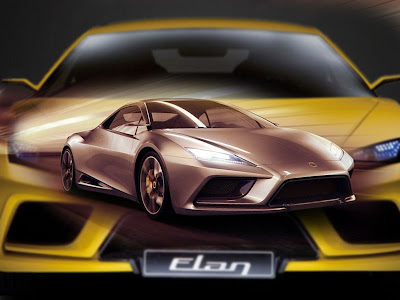
2010 Lotus Sport Cars Elan Concept

At Paris Auto Show 2010 Lotus automaker manufacture has display six new models super car sport. One of the six models is the Lotus Elan Concept. 2010 Lotus Elan Concept Cars, a high performance sports car, is the beating heart of the new Lotus line-up and thanks to some clever innovations the Lotus Elan also has everyday usability too.
2010 Lotus Sport Cars Elan Concept
Elan is expected to go to production in summer of 2013 and will be available for purchase in fall of 2013. Like the Evora, the Lotus Elan features 2+2 seating, suggesting that the new Evora may not really have a long life at Lotus. Prices for the production Elan are estimated to start around $118,500 ( £75,000 ).
Lotus Elan Concept Power is provided by a mid-mounted 4.0-liter V6 engine with 450 PS (331 kW / 444 hp) and 465 Nm (343 lb-ft) of toque. It is backed up by a seven-speed DCT transmission, which enables the 1,295 kg (2,855 lb) car to accelerate from 0-100 km/h in 3.5 seconds and hit a top speed of 310 km/h (193 mph). If that fails to attract your attention, perhaps you’ll be interested in the hybrid variant which will have CO2 emissions as low as 199 g/km. With performance specs like that, there's a little double that Elan is supercar.
From a styling perspective, the Elan is built like an athlete with a muscular physique and perfect poise. It’s a thoroughbred, rigid with tension, ambitious and addictive, nothing but best in class will suffice for this car.
It’s not enough to simply provide performance and exceptional looks, innovation is also integral to the Elan’s appeal. In keeping with the rest of the new Lotus range, the Elan features optional hybrid technology with KERS.
2010 Lotus Sport Cars Elan Concept
Dany Bahar, Chief Executive Officer of Group Lotus, said: “If there was ever a car to make you drive the long way home, it’s the Elan. Perfect for both road and track, the Elan not only ticks all the boxes, it creates new ones too.”
“The Elan will convert people to Lotus, I would challenge people not to become addicted to driving it. It will also go a long way towards dispelling the old misconceptions about this class, that in order to have high performance you must sacrifice usability – those days are gone.”
“Once you drive an Elan you won’t look back, it will give you things you didn’t even realise you were missing – that’s the essence of Lotus and the Elan perfectly captures that spirit.”

2010 Lotus Sport Cars Elan Concept