Showing posts with label BMW. Show all posts
Showing posts with label BMW. Show all posts
Saturday, August 6, 2011
Bmw 135i


Tuesday, August 2, 2011

2014 BMW Sport Cars i8 Concept
The BMW i8 Concept retains much of the theatre and excitement of the BMW Vision EfficientDynamics concept that first previewed the futuristic sports car design at Frankfurt in 2009, and starred at the 2011 Australian International Motor Show in Melbourne last month. Sometimes it is time to leave the city. Escape the restrictions of everyday life. The BMW i8 is an icon of progress. It combines the energizing performance of a sports car with benchmark efficiency.
2014 BMW Sport Cars i8 Concept
Unlike the Vision concept which utilised a diesel engine, the new 2014 BMW Sport Cars i8 Concept adopting a hybrid setup with an electric motor and a 1.5-liter gasoline unit. The 1.5-litre three-cylinder turbocharged petrol engine produces an astonishing 164kW of power and 300Nm of torque. To give that some perspective, the current BMW 125i is powered by a 3.0-litre inline-six with 160kW of power and 270Nm of torque – double the capacity, double the cylinders, 4kW less power, 30Nm less torque.
The 2014 BMW Sport Cars i8 Concept and the fascinating approach that underpins it embody the vision of a sustainable contemporary sports car brought to life. Its innovative plug-in hybrid concept combines the modified electric drive system from the BMW i3 Concept - fitted over its front axle - wîth a high-performance three-cylinder combustion engine producing 164 kW (220 hp)/300 Nm (221 lb-ft) at the rear.

2014 BMW Sport Cars i8 Concept
The electric motor in the 2014 BMW Sport Cars i8 Concept is a full-capability unit which can also power the car on its own, if required. However, working in tandem allows the two drive systems to display their respective talents to the full, delivering the performance of a sports car but the fuel consumption of a small car.
2014 BMW Sport Cars i8 Concept
Assisting the petrol engine is 96kW/250Nm electric motor, which draws power from a lithium-ion battery. With a combined maximum power output of 260kW and 550Nm, the i8 Concept is capable of accelerating from 0-100km/h in just 4.6 seconds (80-120km/h in 4.0 seconds) and will go on to an electronically limited top speed of 250km/h.
2014 BMW Sport Cars i8 Concept
These impressive features of the German sports car are even greater considering that BMW announced a combined fuel consumption of only 2,7 liters/100 km. In terms of dimensions, the i8 Concept measures 4,6m long, 1,9m wide and 1,2m tall.
 2014 BMW Sport Cars i8 Concept
2014 BMW Sport Cars i8 Concept
The weight of every component inside the 2014 BMW Sport Cars i8 Concept has been minimised down to the very last detail, allowing the extra weight of the electric drive system and battery to be cancelled out. The 2014 BMW Sport Cars i8 Concept therefore presents the ideal environment in which to sample this very special drive concept on the road. The passengers sit - in typical sports car style - in an extremely low and enclosed position inside the CFRP-constructed Life module (mounted above the Drive module).
2014 BMW Sport Cars i8 Concept
“The sporting character continues into the interior. Boasting a driver-focused environment unmatched by any BMW Group vehicle before it, the 2014 BMW Sport Cars i8 Concept immerses the driver fully in the unique driving experience. The BMW i8 Concept is the sports car for a new generation – pure, emotional and sustainable,” adds BMW.
2014 BMW Sport Cars i8 Concept
Far from just being a performance car, however, the i8 Concept can also be driven in fully electric zero-emissions mode for up to 35km. A full recharge of the battery from a standard power socket takes approximately 105 minutes.
2014 BMW Sport Cars i8 Concept
The navigation system also calculates the best way to manage energy consumption for the trip to ensure that it operates at peak performance and optimal efficiency when required. Under the European driving cycle, the 2014 BMW Sport Cars i8 Concept uses fuel at a rate of just 2.7 litres/100km combined, making it one of the most fuel efficient internal combustion engined automobiles in history.A production version of the BMW i8 Concept is expected to go on sale in Australia in 2014 with a predicted price tag of $300,000.

 2014 BMW Sport Cars i8 Concept
# High performance 3-cylinder petrol engine (164 kW) in rear with i3's electric motor (limited to 96 kW) in front
# Total torque of 550 Nm (300Nm petrol engine + 250 Nm electric motor)
# 3 driving modes - electric, petrol, or both engines at once
# 1,480 kg
# 0-100kph (62mph): 4.6 seconds
# Top speed: 250kph (limited)
# 2.7 L/100km fuel economy
# 35km pure electric range
# 4 seater
# 50:50 distribution
# Market Launch: 2014
Monday, August 1, 2011
Bmw 525d


Thursday, July 14, 2011
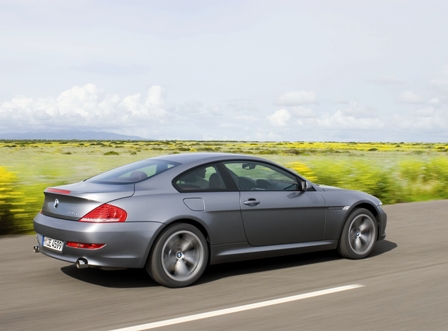
Bmw 635

BMW is a company with a long tradition of participation in motorsports. In the 1970’s, the CS and CSi version of the BMW 3-series had found success as lightweight racers on several different circuits. In the 1980’s, BMW wanted to continue the performance concept with a slightly larger coupe that would be a good fit between their midsize sedan, the 5-series, and their large car, the 7-series. The E24 chassis was born, and with it the 6-series sedans. One of the most powerful versions of this vehicle was the 1989 BMW 635 CSi.

The BMW 635 was visually quite distinctive. The front of the car jutted out over the bumper, giving the grille and headlights a reverse rake and lending the vehicle the nickname of ‘the shark’. The car’s rear deck sloped down to a flat trunk offset by a horizontal lip wing. The car also shared the same circular quad headlights that had been a BMW trademark for decades. The big coupe was powered by the 3.5 liter M30 engine, which in the 635 CSi produced 215 horsepower and 232 lb-feet of torque – quite impressive by the standards of the day. The 635 CSi found direct competition in the Porsche 928, which was powered by a 300 horsepower V8. This gave it superior performance to the BMW, but the lack of anything more than vestigial rear seating put it behind the 6-series in terms of interior comfort. Leather seats, dual-zone climate control and a well-developed suspension helped make the ride of the 635 CSi a fine balance between sport and performance.

This is not to say that the 635 CSi was a slouch in the performance department. The coupe could reach 60 miles per hour in 8.4 seconds and had a top speed of 135 miles per hour. A trailing arm rear suspension kept the car stable during high-speed cornering, despite the significant 3300 lb weight of the car. The 635 CSi could be had with a 4-speed automatic or 5-speed manual transmission. The BMW 635 CSi continued on the tradition of the 3-series on the race track, winning the 24 hours of Spa-Francrochamps and several European Championship races during the campaign of Schnitzer Team BMW. The driver was Gerhard Berger, who would go on to become BMW’s Director of Motorsport.

1989 was the final year for the 635 CSi, and it was considered the best year from an aesthetics perspective, at least in North America. American crash regulations had historically been stricter than those found in Europe, and as a result many of the European cars that had been imported had also been refitted with ugly steel bumpers which stuck out like a sore thumb in the front and the rear. For 1989, BMW was able to fit the 6-series with reinforced bumpers that also molded into the lines of the vehicle, greatly improving the overall look.

When production ended in April in 1989, BMW decided that the next iteration of their coupe would be much larger, with an emphasis on luxury instead of sport. The 8-series would take its place in the BMW model lineup, but it would have a much shorter run than the 6-series, as buyers were disenfranchised with the lackluster performance offered at such a high price tag. The 8-series was even heavier than the 6, and despite being equipped with a V8 and an optional V12 engine, there was no mistaking it for a serious performance vehicle. BMW put the coupe out of its misery after only a few years of production, waiting until the mid-2000’s to re-introduce a large coupe. This time, they used the 6-series moniker again and found much greater success.


Bmw 650i


Subscribe to:
Posts (Atom)


